Your Cart is Empty



Bushwalking in summer in Tasmania is a little different from summer bushwalking in most other parts of Australia. As Tasmania lies in the Roaring Forties it isn’t unusual to have some serious atypical weather when a cold front blasts through. As a result, it is entirely possible to have snow in the mountains in mid summer so the gear chosen for a trip always needs to take this into account.
After 44 years walking in the Tasmanian bush I’ve had the chance to try out quite a bit of different gear from my first tent (a Paddy Pallin floorless japara tent) and stove (Trangia methylated spirits) to the equipment that I now carry.
My cooking setup consists of aSoto Windmaster stove paired with a Firemaple Ramen heat exchanger pot. This is a super compact, light and economical setup that heats food and water remarkably quickly.
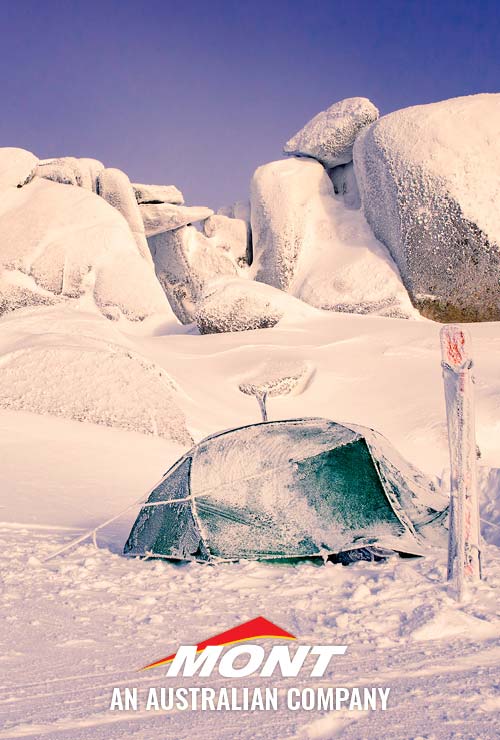
My tent of choice is aMont Moondance II FN. Occasionally if weight is a major consideration I will take theMoondance I FN but the extra space of the Moondance II is a pleasant luxury with a minimal weight penalty. I believe that a mesh inner tent in Tasmania is suitable for only the most benign conditions and a full nylon inner is far warmer and more weatherproof. I have modified my tents slightly by fitting rare earth magnets to hold the doors open when furled. This makes closing the door from inside the tent a lot easier. A moderate pull on the door releases it but the magnets still work fine when there is a bit of wind about.
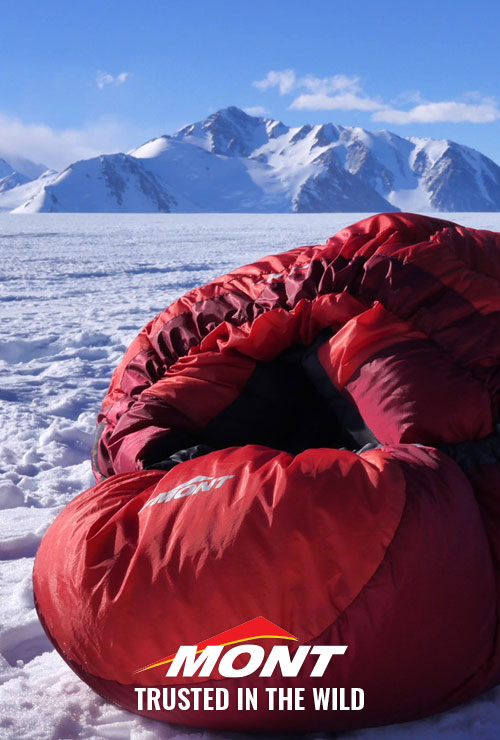
I believe that getting a good sleep is paramount so a warm sleeping mat and bag is vital. I use an Exped Ultra 6R sleeping mat teamed up with aMont Helium 450 sleeping bag (orZero Superlight in very warm conditions). I always use aMont silk innersheetand if it is cool I often wear aMont polarfleece balaclava for extra comfort and warmth. A small luxury is a Flextail Zero pump to inflate the mat :)
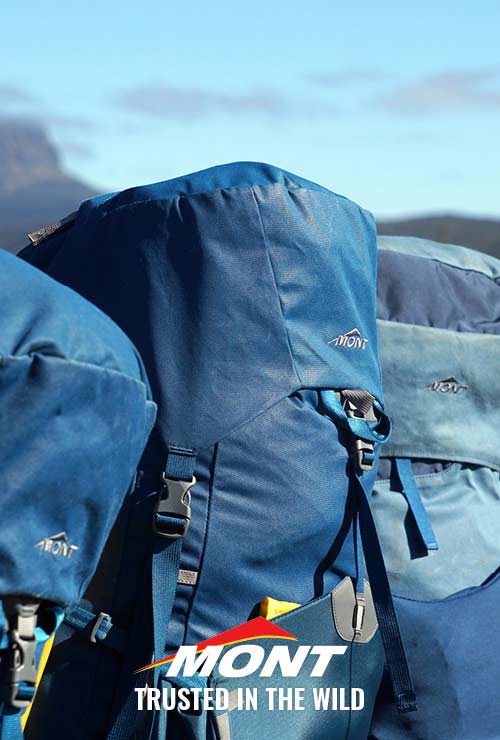
My pack is theMont Flyte, a relatively simple but rugged 76 litre canvas pack suited to Tasmanian conditions.
Clothing consists of aMont Odyssey waterproof jacket along withMont Australwaterproof trousers. Under that I wear aMont Sundance long sleeve shirt if mild or aMont Powerdry long sleeve crew neck in cooler conditions. I always take aMont Flashpoint fleece jacket (more versatile than a pullover style top) and in summer aMont Zero Ultralight jacket(this is an amazing super light but remarkably warm jacket which is one of my favourite pieces of gear). In winter I carry the fabulously warmHelios down jacket. Summer or winter I carryPowerdry long johns and wear a pair ofBimberi stretch shorts along with canvas gaitors. All of this gear dries very quickly which is essential as even with the very best breathable waterproof fabrics, some moisture does accumulate when walking so quick drying gear is vital.
With the previously mentioned balaclava, aMont fleece beanie, a wide brimmed hat and a pair of ultra lightweight synthetic Montane mittens which take almost no space in the pack I am prepared for most summer conditions.
Electronics consist of the manadatory PLB, anOcean Signalalong with an InReach Mini 3 Plus satellite messenger. It’s always good to be able to advise of delays, get a weather report or to just say Hi to the better half :)
I use a Garmin Fenix 8 watch with alternative (Talky Toaster) topographical maps loaded. This watch is a superb piece of gear. I usually load a pre prepared GPX file of my planned route to the watch before a trip. A paper map and compass is carried as an analogue backup.
I often enjoy night walks so I carry a heavier than normal headlamp but the advantage is superb light output and battery longevity that makes night walking a true pleasure. The headlamp I use is a LuciferLights M6+ which is produced by a high end headlamp manufacturer in the Czech Republic.
My phone is usually turned off in the bush but I do carry a Nitecore Air powerbank, a super lightweight 5000mAh pack that weighs almost nothing along with a RollingSquare multi function cable so I can recharge almost anything electronic that I am carrying.
I am a bit of a temperature nerd so I carry a pair of super accurate Sensorpush temperature sensors, one for outside the tent and the other for inside. The temperature difference is often 4° or 5°C between inside and outside the tent, particularly in winter.
A compact first aid kit plus snake bandage, gear repair bag and toilet gear goes into the pack as well. For lightweight comfort I include a square of closed cell foam as a sit mat for use on wet or cold rocks and at camp I fill a Hydrapak 4L water bladder for my water supply.
And the final result? Without food and gas I have a base weight of 10.2kgs which is really very good and yet at the same time I am not going ultra lightweight or sacrificing safety for weight.
But then there is the camera gear......
Probably the most important thing to pack though is a good amount of respect for the environment, commonsense and experience. And knowing when to retreat from a situation is really important, there is always next time.
Geoff Murray
Mont Ambassador
Comments will be approved before showing up.

An idea germinated a couple of weeks ago to walk the track in winter, something I hadn’t done before.

This trip into the Budawang National Park began as a mission to photograph new product releases, but beneath the brief sat a much more personal objective.

Summer in Tasmania’s mountains presents the walker with a multitude of flowers, ranging from the prickly Richea Scoparia to the diminutive flowers of the remarkable Tasmanian Cushion Plant.