Your Cart is Empty

Hydronaute is Mont’s advanced waterproof and breathable fabric technology. Engineered for alpine expeditions, bushwalking, and professional outdoor use, Hydronaute represents the cutting edge in protection from the elements. It is purpose-built to perform in heavy rain, snow, and high-output conditions where both external weather resistance and internal moisture management are critical.
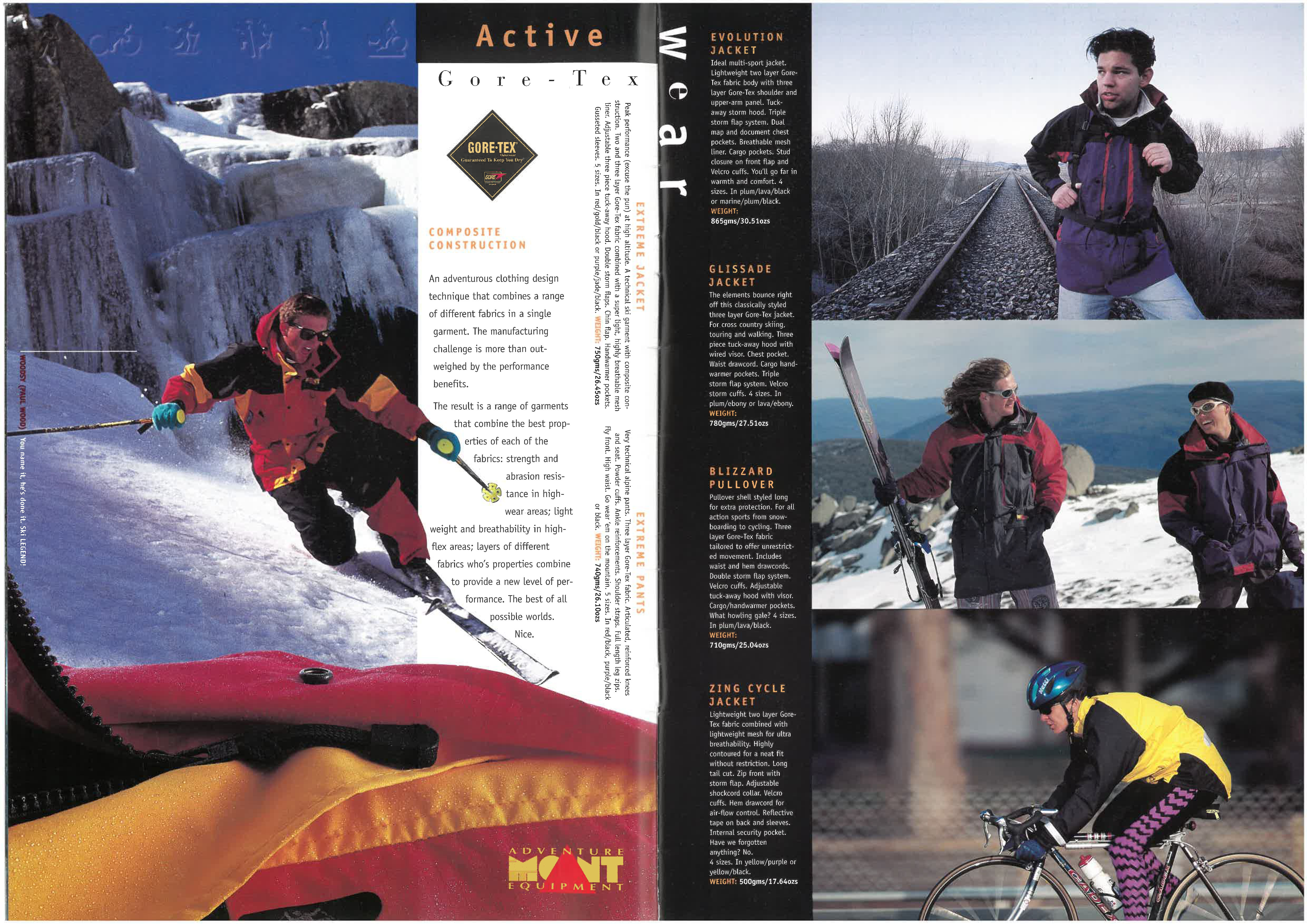
Mont has refined the Hydronaute fabric range for decades to meet evolving performance standards and environmental expectations. Originally, Mont garments incorporated GORE-TEX® fabrics. In the early 2000s, Mont launched Hydronaute—a fabric technology that utilises an advanced, non-porous polyurethane (PU) monolithic membrane. Hydronaute membranes are sourced from Mont’s textile partners, global leaders in high-performance textiles for the outdoor market.
Historically, microporous membranes—such as those used in traditional GORE-TEX® fabrics—were the standard in waterproof-breathable garment technology. These membranes rely on a network of microscopic pores to allow vapour to escape while blocking liquid water. While effective in many scenarios, Mont identified several limitations with this approach, particularly under high-output conditions and the long-term environmental impact at the end of the garment's life.
Mont’s commitment to continuously making 'something better' underpins this transition away from traditional membranes and represents the core rationale that has driven ongoing advancements and technical innovations in Hydronaute fabric technology.
PFAS-FREE MEMBRANE CONSTRUCTION
Polytetrafluoroethylene (PTFE) and expanded PTFE (ePTFE) membranes, common in many waterproof-breathable fabrics, fall within a category of chemicals known as PFAS. These are often referred to as "forever chemicals" due to their persistence in the environment and growing concerns over potential health impacts.
Mont transitioned to a PU monolithic membrane free of PTFE and ePTFE, eliminating PFAS from its membrane technology. This change preceded broader industry PFAS trends and reflected Mont’s focus on integrating high-performance materials without compromising on environmental considerations.
SUPERIOR BREATHABILITY IN TESTED CONDITIONS
Hydronaute garments maintain dryness not only from rain and snow but also from perspiration during intense activity, ensuring superior comfort and thermal regulation in demanding field environments. This performance is made possible by a monolithic PU membrane that uses a non-porous structure to move moisture vapour through the membrane via a process called molecular diffusion. Unlike microporous membranes, which rely on static pores that can become less effective in high humidity, monolithic membranes thrive in such environments.
In practical terms, this means moisture from perspiration is actively drawn away from the body, even in wet, high-output conditions such as prolonged alpine climbs. This level of breathability is particularly important in down-filled garments and sleeping bags, where internal moisture management is essential for warmth in the coldest conditions.
Hydronaute fabrics achieve breathability ratings up to 48,000g/mÇ/24hrs (B1 test). Mont proudly publishes technical performance data for all Hydronaute fabrics—offering full transparency that many global brands do not provide.
LONG-TERM DURABILITY AND RELIABLE PERFORMANCE
Because monolithic membranes contain no microscopic pores, they are inherently more resistant to clogging or damage caused by dirt, body oils, and other contaminants. This structural integrity allows Hydronaute fabrics to retain their waterproof and breathable properties over time with proper care
Exceptional performance without compromise
Mont’s transition to a high-performance PU membrane for all Hydronaute fabrics reflects a thoughtful decision to achieve both technical excellence and durable performance. With a PFAS-free membrane, superior breathability, and robust durability, Hydronaute continues to represent a new standard in waterproof-breathable apparel. It’s engineered for the realities of the wild, where comfort, protection, and peace of mind matter most.
Built for Longevity. Driven by Responsibility.
A COMPLETELY PFAS-FREE FUTURE
Mont is fully committed to removing PFAS from all elements of our Shellwear, including Durable Water Repellent (DWR) treatments and zippers, while maintaining the highest performance standards. We have been conducting extensive field testing on PFAS-free alternatives for many years. Our approach prioritises real-world performance, ensuring any new chemistry introduced meets the high standards required.
Several Mont garments already feature PFAS-free DWRs, and we are scaling this across the range while continuing rigorous performance evaluation. The goal is a fully PFAS-free ecosystem— membrane and DWR inclusive, without compromising reliability in the field.
WHY IT MATTERS
Mont’s fabric development roadmap is guided by long-term durability and functional sustainability. This means making decisions that reduce environmental impact across the garment lifecycle, without compromising performance in the harshest environments. Our commitment goes beyond removing problematic chemistries.
We are focused on field-testing through long-term wear in the wild to ensure reliability in the most extreme technical environments. Our objective is clear: to deliver technical gear that remains dependable and resilient, while advancing our environmental responsibility.
CLARIFYING PFAS-FREE
Mont Adventure Equipment defines PFAS-free as free from intentionally added per- and polyfluoroalkyl substances in both membranes, DWR technologies, and trims. However, trace amounts of PFAS may still be detected due to widespread environmental presence in manufacturing environments, water systems, or surface contact during production. These trace levels are unintentional and do not result from Mont’s material or design choices.